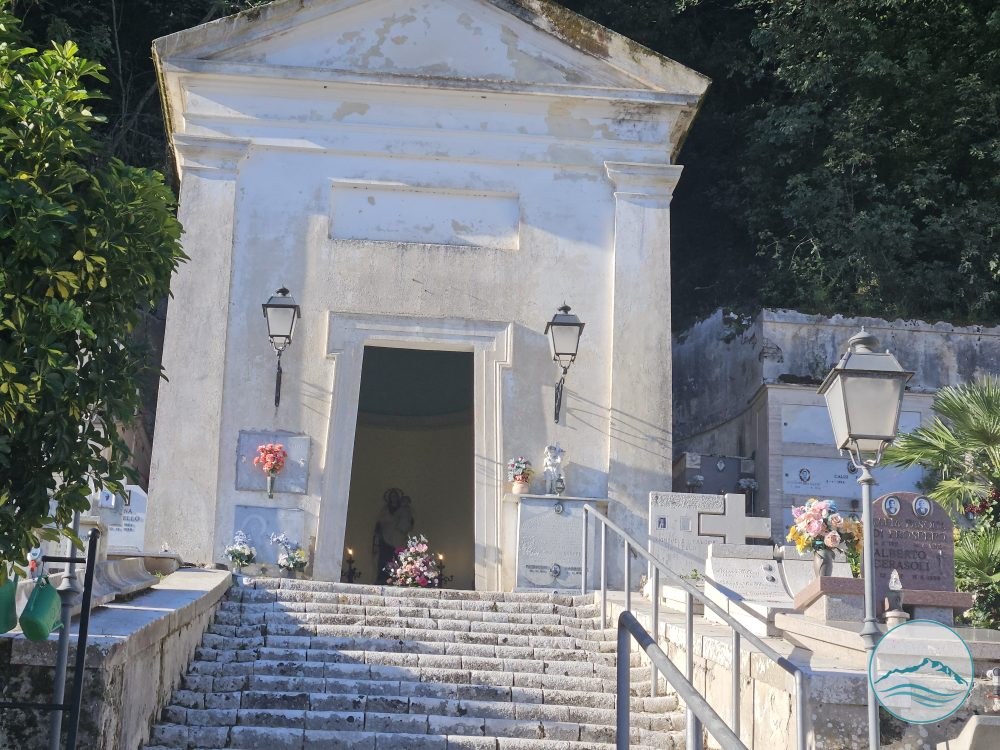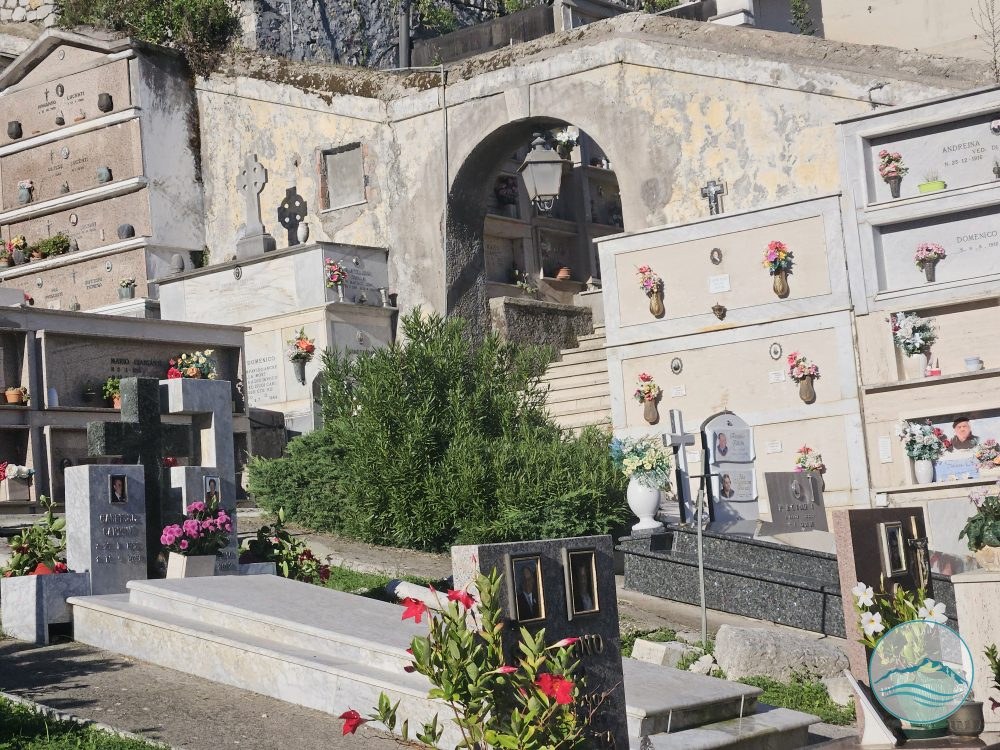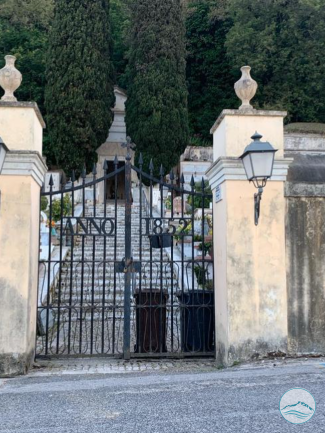
The cemetery of San Felice Circeo dates from the 19th century, when here too the ancient custom of burying the dead inside the town had to be abandoned.
Before the Edict of Saint-Cloud (1804), by which Napoleon banned burials in churches and within town walls and which was later extended to the Italian territories, burials in San Felice took place in the Belvedere square, today’s Piazza Marconi (“la Ringhiera”). Here stood the church of Santa Maria del Carmine, run by the Confraternity of Suffrage, next to which were the common graves, closed by large stone slabs. The church was closed to worship at the beginning of the 19th century and later destroyed.
Once the old burial ground was gone, the town long remained without a proper place for its dead, with serious hygiene problems. Prince Stanislaus Poniatowski offered to build a cemetery outside the walls, but it was Cardinal Antonio Tosti, then pro-treasurer of the Reverend Apostolic Chamber, who started the works in 1842. Two years later, in 1844, Capponi recounts, a severe famine forced the people of San Felice to live on “poppies and chicory and other local herbs” cooked in seawater; the diseases that followed raised mortality and made the work even more urgent. The cemetery was completed on 9 December 1855 by Bishop Bedini.
Over time the cemetery has been altered and enlarged, as the more recent structures show. A walk among the graves retraces the history of the area: here lie scholars such as Alberto Carlo Blanc, noble families such as the Aguet, and figures from literature and entertainment who wished to remain in the place they loved, such as Anna Magnani, Alberto Lupo, Marcello Fondato and George Weller.
Epoca: 18th century or 1842-1844 → 1842–1855